

Skill Gap Predictor
Proactive workforce planning powered by AI.
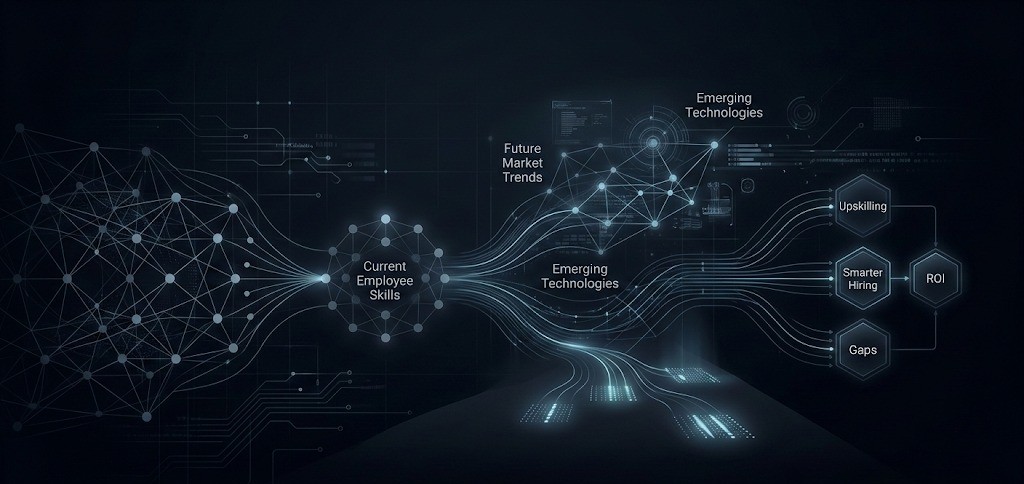
Skill Gap Predictor is an AI-powered workforce intelligence solution that forecasts future skill gaps before they impact business performance. By analyzing job market trends, emerging technologies, and current employee skills, it enables proactive upskilling, smarter hiring, and measurable ROI on training investments.

The Challenge
Organizations discover gaps too late, face rapidly shifting technologies, endure long reskilling cycles, and spend heavily on recruiting and training without clear ROI. Traditional planning lacks predictive intelligence, leaving teams unprepared.
Solution
Skill Gap Predictor uses AI and predictive analytics to forecast skill shortages 12–24 months in advance. By aligning future demand with current capabilities, it recommends upskilling and hiring strategies linked directly to business goals.
How It Works
Market & Trend Analysis
Tracks emerging tech and hiring patterns.
Skill Mapping
Compares demand with employee capabilities.
Future Gap Prediction
Identifies gaps well in advance.
Upskilling Roadmaps
Generates personalized learning plans.
Course & Mentor Recommendations
Matches training to needs.
ROI Tracking
Measures workforce investment impact.
Key Features
- ✔ Predictive skill gap analysis (12–24 months)
- ✔ Personalized upskilling roadmaps
- ✔ Course and mentor recommendations
- ✔ ROI-focused workforce analytics
- ✔ Objective, bias-reduced skill assessment
- ✔ Enterprise integration readiness
Technology & Intelligence
The platform uses predictive ML and trend analysis, Python-based analytics, and data from job markets, HR systems, and industry signals. It integrates with HRIS, LMS, and ATS platforms, and delivers real-time dashboards for insights and ROI.
Industry Use Cases
Human Resources and Talent Management
Learning and Development departments
Enterprise workforce planning
IT and engineering leadership
Financial and strategic planning teams

Business Impact
Reduced time-to-hire through internal upskilling
Lower recruitment and onboarding costs
Improved retention and engagement
Measured ROI on training investments
Stronger alignment with business strategy
Conclusion
Most companies discover skill gaps only after a project is delayed or the wrong hire has been made. Codework's Skill Gap Predictor compares current team capabilities with business goals to identify future talent risks before they cause problems. That gives HR teams the insight they need to build targeted learning programs that genuinely improve performance.
Find your team's skill gaps in minutes - try a free analysis.